
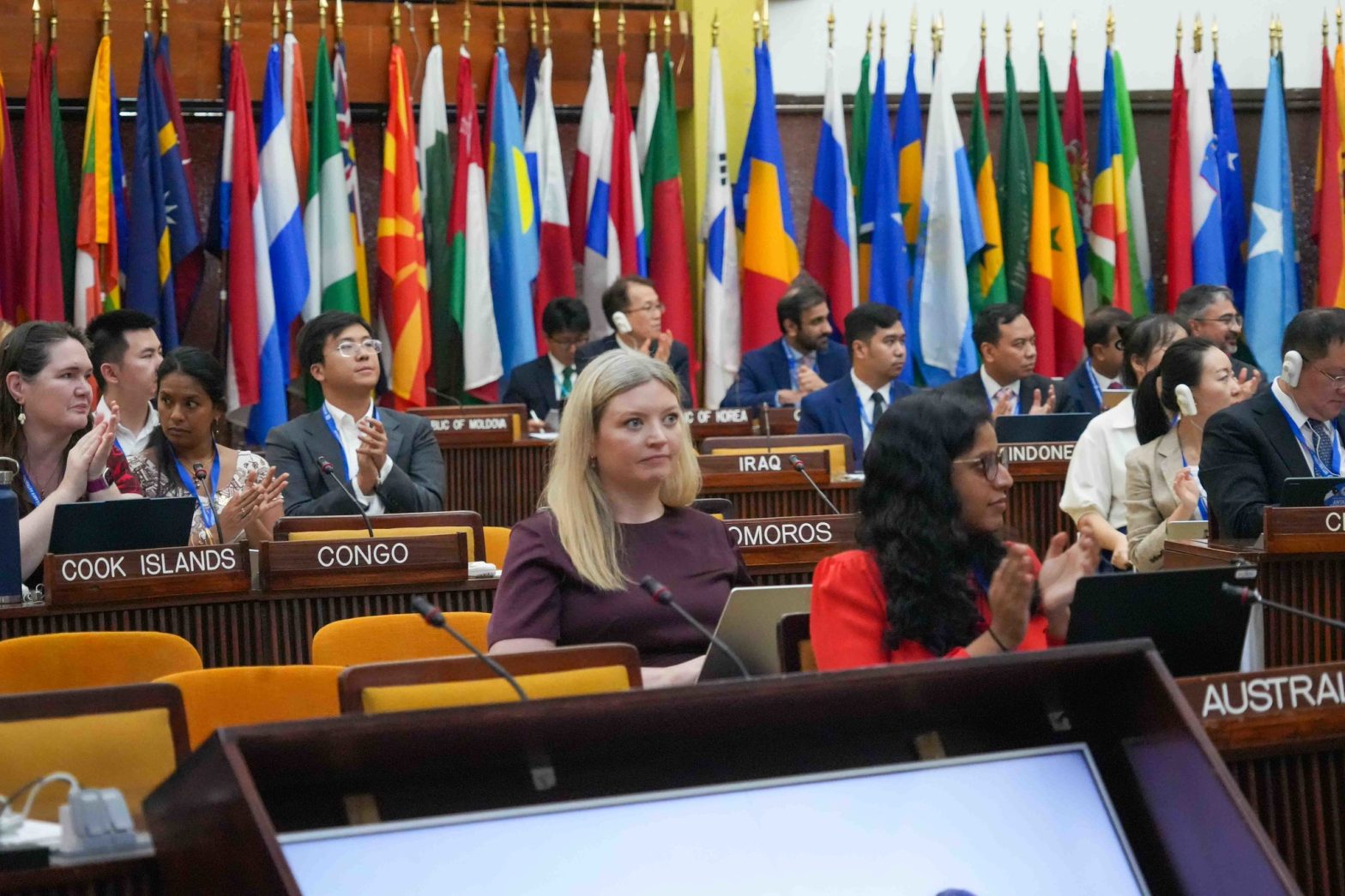
Kingston, Jamaica (19 September 2026) — The International Seabed Authority (ISA) concluded Part II of its 31st Session, held from 29 June to 31 July 2026 in Kingston, Jamaica. Over five weeks, the Session brought together the Legal and Technical Commission, the Finance Committee, the Council and the Assembly for work spanning the Authority’s regulatory, institutional, financial and scientific mandates.
The progress made and decisions taken during the Session have established an ambitious programme of work towards the 32nd Session, advancing the Mining Code, strengthening environmental governance and equipping the Authority to deliver on the responsibilities entrusted to it by Member States.
Confidence in the Authority and its mandate
In considering the Secretary-General’s Annual Report, Member States welcomed the progress made across the Authority’s mandate, including on the development of the rules, regulations and procedures, capacity development and marine scientific research. Delegations emphasized the importance of science-based decision-making, environmental protection and equity, and reaffirmed the established place of ISA within the wider framework of global ocean governance, including complementarity with BBNJ.
The discussions also reaffirmed the principle of the common heritage of humankind at the heart of the regime of the Area. Taken together with the substantial programme of work entrusted to the Secretariat for the intersessional period, these outcomes reflected continued confidence in the Authority’s ability to deliver progress under the guidance of its Member States.
Advancing the Mining Code towards the 32nd Session
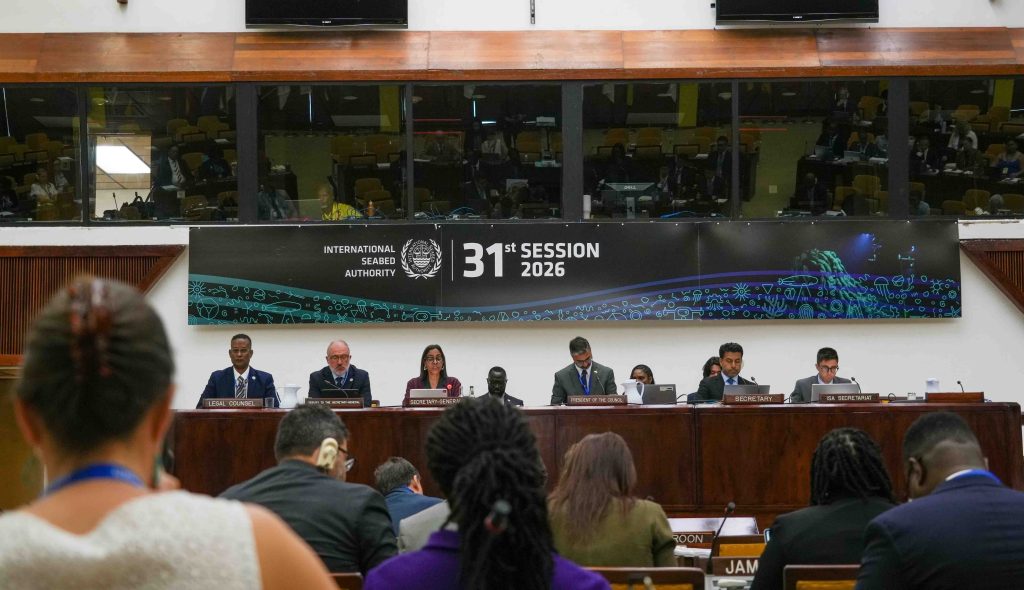
During Part II of the 31st Session, under the leadership of Council President Mr. Mayank Joshi, High Commissioner and Permanent Representative of India to the ISA, delegations advanced negotiations on the Draft Regulations for the Exploitation of Mineral Resources in the Area in a spirit of constructive dialogue, transparency and cooperation. Building on the thematic approach agreed as a framework for discussions, they worked from Revision 3 of the Further Revised Consolidated Text and an updated list of outstanding issues.
At the end of the Session, the Council requested the Secretariat to draft a roadmap for consideration at the first part of the 32nd Session, setting out milestones for the timely adoption of the rules, regulations and procedures relating to exploitation and an updated indicative list of key outstanding issues requiring further thematic discussion. It also requested the Secretariat to provide an advanced negotiating text, harmonizing and streamlining the Further Revised Consolidated Text and taking into account discussions and outcomes achieved during the 31st Session as well as subsequent intersessional input.
Member States also recognized the central role of Standards and Guidelines as an integral component of the future Mining Code and requested the Legal and Technical Commission to undertake a review of the existing Phase 1 Standards and Guidelines with a view to preparing an updated and consolidated version of each Standard and Guideline. They further requested the Commission to prepare, as appropriate, drafts of those Standards and Guidelines identified as priorities in the Report of the Chair
Together with intersessional work, including through the informal groups and the Friends of the President groups, these decisions provide a clearer pathway for substantive progress when negotiations resume in March 2027.
Strengthening Environmental Governance
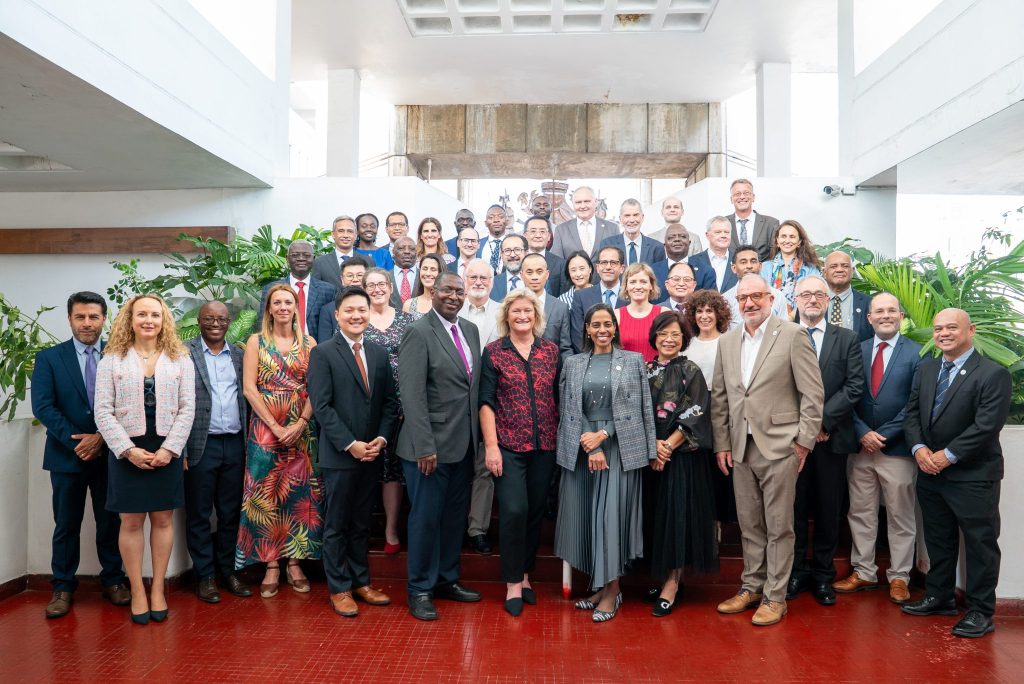
Member States welcomed the continued engagement of the Legal and Technical Commission through dedicated dialogues on Regional Environmental Management Plans (REMPs) and on Environmental Threshold Values, widely recognized as valuable exercises in transparency and accountability towards informed decision-making.
REMPs continued to demonstrate their importance as an approach to regional environmental planning, bringing together scientific knowledge, environmental planning and stakeholder engagement. Work progressed on REMPs for different regions, with further work on the North-west Pacific, Clarion-Clipperton Zone and Indian Ocean continuing intersessionally towards the 32nd Session.
Equipping the Authority to Deliver
Member States adopted the Authority’s budget for the financial period 2027–2028, providing a combined US$30.7 million for the Secretariat and the Enterprise, an increase of approximately 16 per cent compared with the approved budget for 2025–2026. The decision, taken against a challenging financial environment for many Member States, equips the Authority with the resources to deliver the mandates entrusted to it.
The decision also reinforces the importance of effective cooperation among the organs of the Authority and the Secretariat as work intensifies towards the 32nd Session.
Looking ahead, a central focus of the Finance Committee’s work will be the equitable sharing of financial and other economic benefits derived from activities in the Area. The Assembly requested the Committee to continue its work on the relevant rules, regulations and procedures and to present to the Council at the 32nd Session the different options studied to date, including approaches based on direct distribution and the Common Heritage Fund, before providing recommendations, on the basis of guidance received, for consideration by the Council and the Assembly.
Continuity in Exploration
The Session also delivered important decisions concerning existing exploration activities. Member States approved nine applications for the extension of exploration contracts and considered reports on the relinquishment of exploration areas by contractors.
The extensions provide continuity for exploration activities undertaken within the legal framework established by UNCLOS as Member States continue their work towards the adoption of the Mining Code.
Contractors continue to make important contributions to the work of the Authority through the generation of scientific and environmental data, marine scientific research, technology development, training and capacity development, helping to expand collective knowledge of the deep seabed and its ecosystems.
Broadening Participation in the Authority
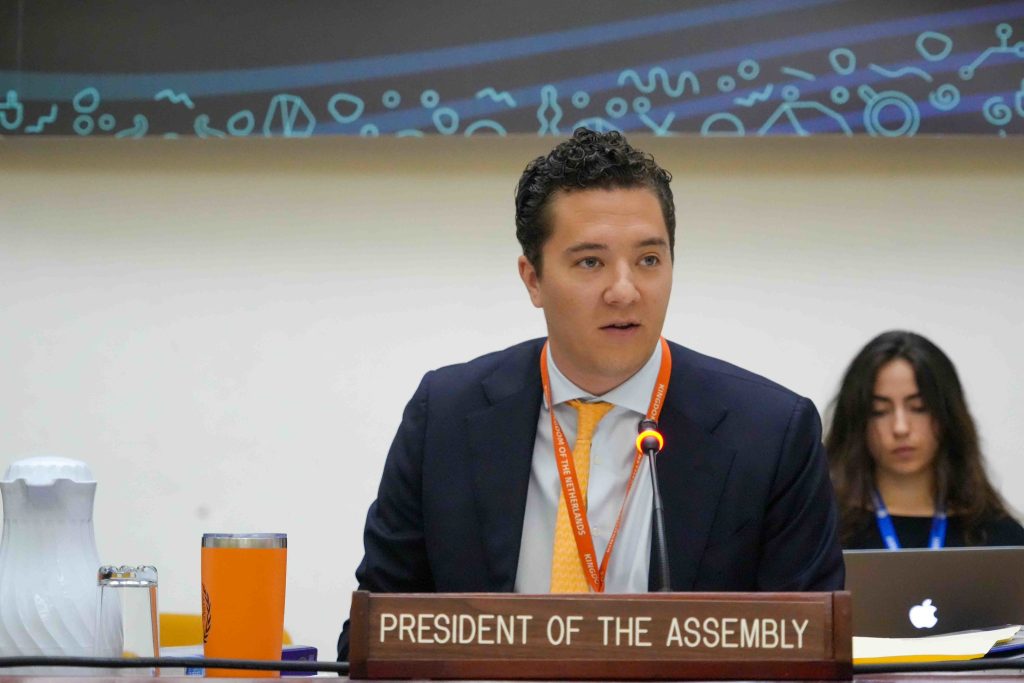
At the opening of the Session, the Assembly elected Mr. Oliver Whitehead of the Netherlands as its President for the 31st Session. The Assembly paid tribute to the outgoing President, Ambassador Dwight Gardiner, whose steady leadership and dedication guided the Authority’s supreme Organ through the 30th Session and helped strengthen the spirit of dialogue and collaboration that continues to characterize its work.
The Assembly approved twelve new observers to the Authority. It also agreed interim arrangements, on a without-prejudice basis, for contractors to attend the public meetings of the Assembly at its 32nd Session, and decided to continue consideration of the matter intersessionally, with a view to preparing draft guidelines for further consideration.
Protecting the Common Heritage through Multilateralism
Throughout the 31st Session, a spirit of consensus and commitment to multilateral cooperation remained central to the Authority’s work. Member States reaffirmed the central role of UNCLOS as a cornerstone of international law and ocean governance and the importance of safeguarding the common heritage of humankind through multilateral cooperation.
The Assembly considered a possible request for an advisory opinion from the Seabed Disputes Chamber of the International Tribunal for the Law of the Sea, pursuant to article 191 of the Convention, concerning the legal implications for the Authority of activities in the Area undertaken by parties outside the framework of the Convention. The matter will be further discussed under the facilitation of Malta in the intersessional period.
The continuation of this discussion, together with progress on the Mining Code, reflects the wider commitment of Member States to protecting the integrity of the regime of the Area through international law and multilateral decision-making.
Strengthening Cooperation Across the Ocean Community
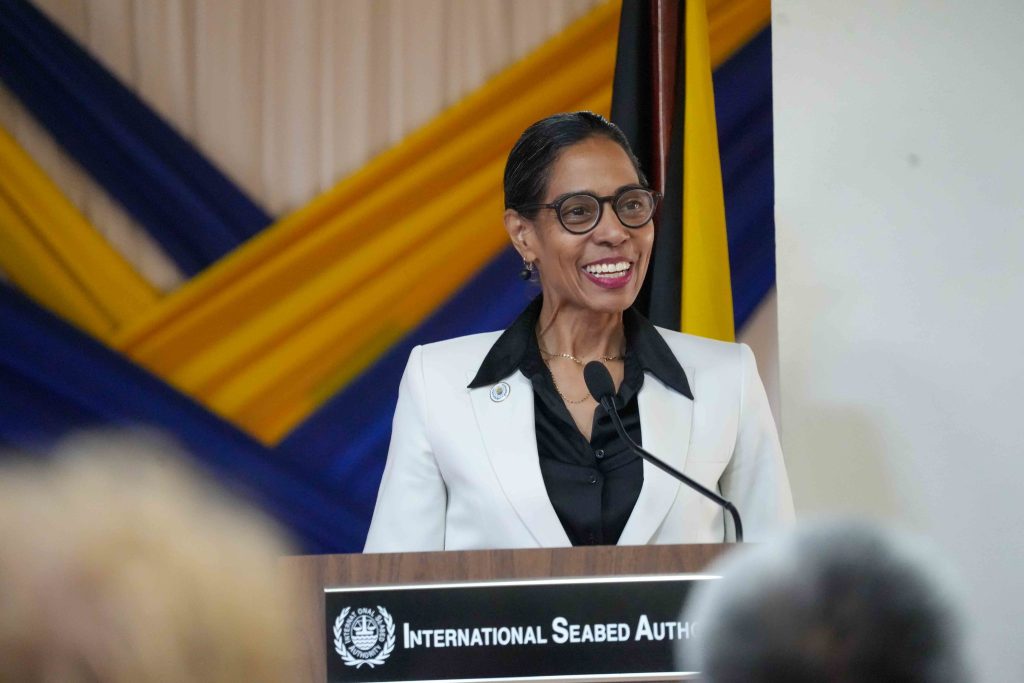
The Assembly welcomed the participation of the Secretary-General of the International Maritime Organization, Mr. Arsenio Dominguez, reflecting the growing collaboration between the two organizations under their 2016 Agreement of Cooperation.
Addressing the Assembly, Mr. Dominguez welcomed further cooperation and noted the two organizations’ meaningful joint engagement, including under the BBNJ Agreement. He affirmed that the IMO stands ready to share its experience in environmental protection to ensure complementarity between the two mandates and stressed that multilateralism remains essential at a time of shared global challenges.
His participation underscored the importance of cooperation between international organizations in strengthening coherent and effective global ocean governance.
Partnerships and Engagements
The Session also featured a series of side events co-organized by the Authority and its partners. These included the launch of a new era of the See Her Exceed (SHE) programme, and its knowledge product, the Gender Compact, co-sponsored by the Governments of France and Belgium, marking a milestone in the Authority’s work to promote the safe and meaningful participation of women in activities at sea.
The side events also included a Sustainable Seabed Knowledge Initiative (SSKI) event, the Authority’s multi-donor platform for advancing deep-sea biodiversity knowledge through global partnership, and an event on the African Academy for Deep Sea Diplomacy, held with the Government of Cameroon and the International Relations Institute of Cameroon and supported by the ISA Partnership Fund, dedicated to building leadership in deep-sea governance among African States.
In the margins of the Session, the second edition of the Deep-Sea Dialogues was held at the Institute of Jamaica, together with the Dona Bertarelli Philanthropy, the International Union for Conservation of Nature and Oceano Azul Foundation, bringing science, culture and the public into conversation on the deep sea; a read-out of the Dialogues was shared with Member States and observers during the Assembly.
Stakeholder events held in the margins of the Assembly included a discussion convened by the Minderoo Foundation with the Ellen MacArthur Foundation on meeting future critical minerals demand and the role of the circular economy, and an event convened by the Government of Malawi and WWF International on navigating the future of the deep sea through security, precaution and multilateral pathways.
From the 31st to the 32nd Session
The decisions of the 31st Session now provide the basis for an intensive intersessional programme of work. The roadmap for the Mining Code, the advanced negotiating text, further work on Standards and Guidelines, continued development of REMPs and environmental thresholds, and implementation of the institutional and financial decisions taken in July will provide the foundation for the next stage of negotiations.
The 32nd Session of the ISA Assembly will be held from 26 to 30 July 2027. The Council will meet from 8 to 19 March and from 12 to 23 July 2027.
As the Authority moves from its 31st to its 32nd Session, its work will continue to be guided by the Convention, by the decisions of Member States and by the principle at the heart of the regime of the Area: that its resources are the common heritage of humankind.