
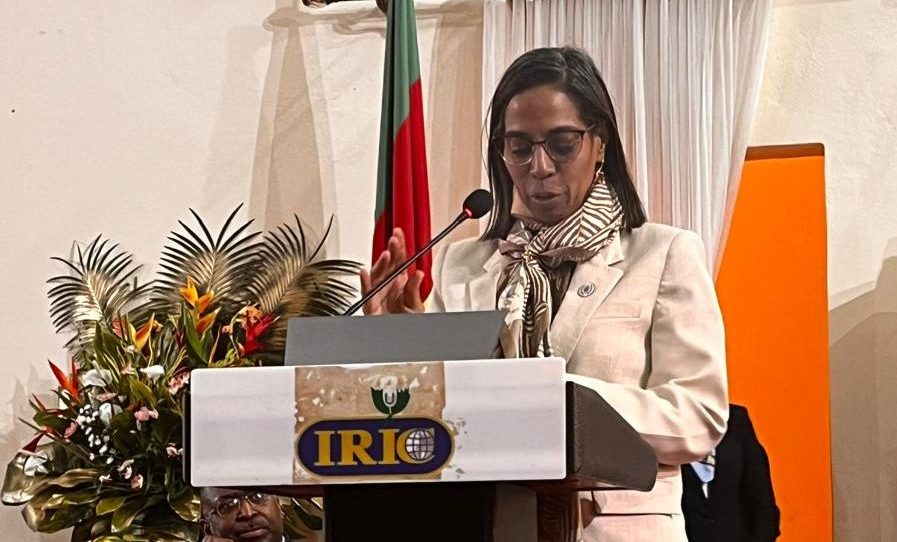
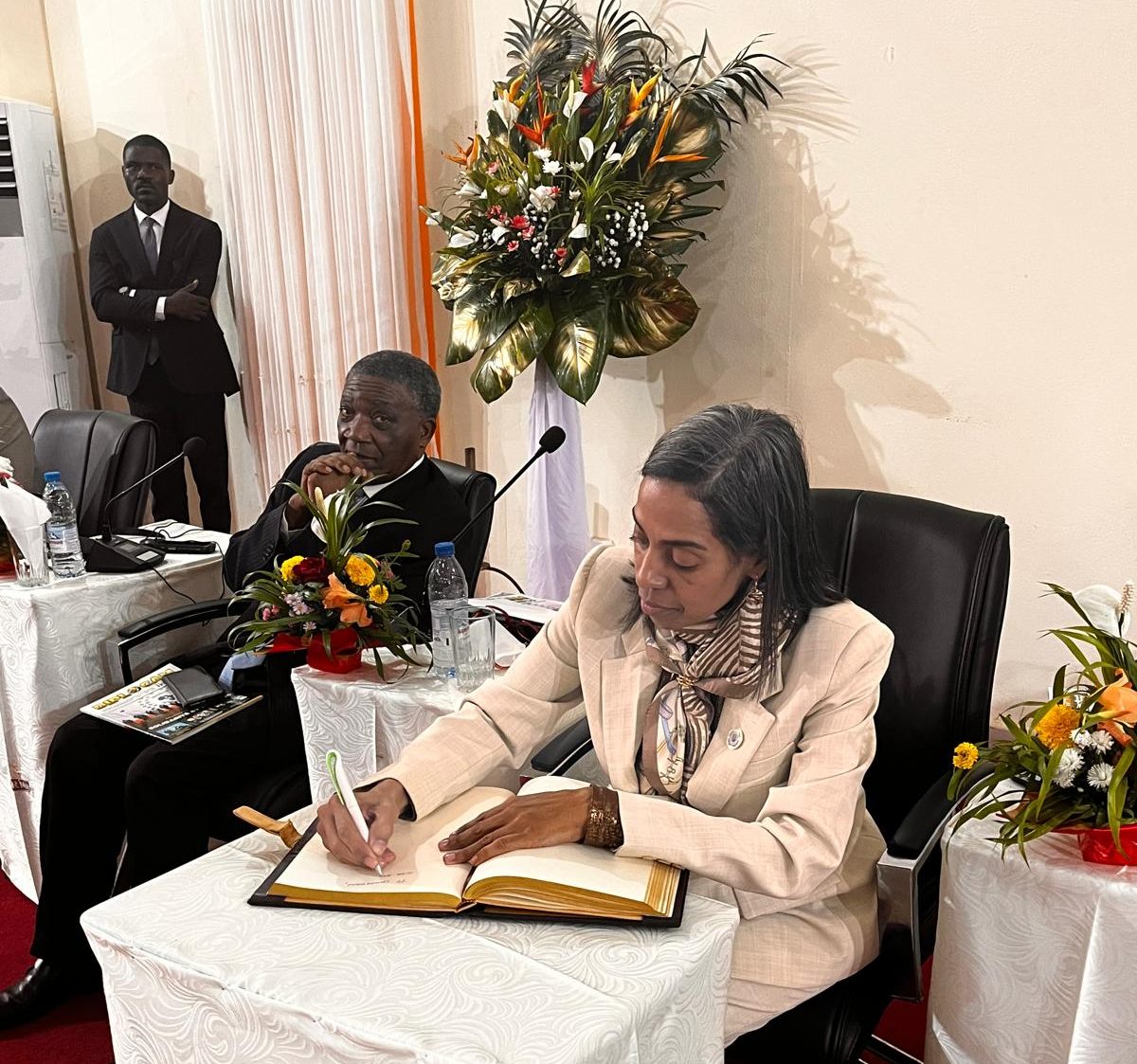
Yaoundé, Cameroon, 9 February 2026 – the Secretary-General of the International Seabed Authority (ISA), Leticia Carvalho, in partnership with the Government of the Republic of Cameroon, officially opened the inaugural in-person week-long training workshop for the African Academy for Deep Sea Diplomacy (ADSEA) in Yaoundé, Cameroon, hosted by the International Relations Institute of Cameroon (IRIC). The opening reception included immense fanfare from Cameroon, including the attendance of Cameroon government officials, Dr. Daniel Urbain Ndongo, Director of IRIC; Mr. Oumarou Chinmoun, Secretary-General, Ministry of External Relations; Professor Aleian Didier Olinger; and H.E. Mr. Tommo Monthe, Permanent Representative of Cameroon to the ISA.
The ADSEA is designed to bring together 27 African diplomats, government officials and policymakers from all five African sub-regions, representing coastal States, landlocked developing countries and small island developing States.
ADSEA forms part of the ISA’s broader commitment to capacity development as a strategic investment, aligning with the ISA Capacity Development Strategy and complementing initiatives such as the Deep-Dive e-learning platform, Joint Training and Research Centres and the ISA Partnership Fund. The ADSEA also contributes to the objectives of the United Nations Decade of Ocean Science for Sustainable Development by strengthening the human and institutional capacity required to translate science into policy and policy into responsible governance.
The training programme includes an examination of legal concepts and institutional structures, negotiation simulations that mirror real processes in the Council and Assembly and drafting exercises to strengthen participants’ engagement in text-based negotiations. Throughout the training, participants will deepen their understanding of how the ISA organs and other advisory bodies interact.
In her opening remarks, Secretary-General Carvalho emphasized that ADSEA responds directly to priorities expressed by African Member States for tailored, practical and high-quality training on the legal and institutional regime governing the seabed beyond national jurisdiction. Secretary-General Carvalho noted that “The ADSEA is a platform designed not only to inform, but to equip and empower. It is a space where knowledge translates into confidence, and confidence into effective participation.” She also emphasized the Authority’s commitment to gender equality and the empowerment of women in ocean affairs by welcoming the strong participation of women in the inaugural cohort. Secretary-General Carvalho noted her recent induction into the UN International Gender Champion network where she met its distinguished chair, Mr. Martin Chungong, who is also Secretary-General of the Inter-Parliamentary Union in Geneva. Hailing from Cameroon, Mr. Chungong is the first non-European and first African to be elected to this distinguished role. The Secretary-General expressed her anticipation of working with the Inter-Parliamentary Union to raise awareness of ISA’s work amongst African Parliamentarians. Finally, Secretary-General Carvahlo commended the Government of Cameroon for its hospitality and leadership, stating that “Hosting and engaging so actively in the ADSEA, the Government of Cameroon is contributing to a broader continental ambition: ensuring that African States are fully equipped to engage confidently and constructively in global ocean governance.”
Hosting the inaugural in-person ADSEA workshop demonstrates the Government of Cameroon’s sustained and substantive engagement with the Authority, having played a particularly central role in ISA’s governance since its inception, from Mr. Martin Belinga-Eboutou serving as President of the Assembly in 2002, aa formative moment for the Authority, to Mr. Tommo Monthe, serving as President of the Council in 2014, where he guided deliberations during a period of growing institutional and regulatory complexity. These two distinct leadership roles reflect the confidence of ISA’s membership in Cameroon’s capacity to facilitate consensus and uphold the principles of equity, balance and collective responsibility. Cameroon’s contribution to the technical and scientific dimensions of ISA’s work is also notable, acknowledging the service of Théophile Ndougsa Mbarga as a member of the Legal and Technical Commission, who has both informed ISA’s deliberations and elevated the technical credibility and expertise of the African continent.
Following the official opening ceremony, a panel discussion moderated by Professor Aleian Didier Olinga on “The Role and Place of African States in the Work of the ISA,” Secretary-General Carvalho underscored that countries across the African continent have been foundational in shaping the legal architecture of the deep seabed regime, stating “Many of the principles that define the ISA today, equity, collective benefit, balance between development and protection, reflect concerns that African States articulated early and consistently.”
Secretary-General Carvalho highlighted the continent’s multidimensional stake in deep-sea governance, noting that coastal States have direct interests in marine environmental protection and sustainable ocean economies. In contrast, landlocked developing countries have the right to participate in activities in the Area and share in benefits derived therefrom. She emphasized that States with established mining sectors bring valuable experience to discussions on coherent and equitable benefit-sharing frameworks.
During the high-level dinner hosted in her honour by the Government of Cameroon, Secretary-General Carvalho re-emphasized the importance of partnership and trust in effective ocean governance, stating that “Initiatives such as the ADSEA demonstrate how shared principles can be translated into practical and lasting outcomes through cooperation between States, regional institutions and the international system.”
About ISA
ISA is an autonomous intergovernmental organization mandated by the United Nations Convention on the Law of the Sea to manage the mineral resources of the seabed beyond national jurisdiction for the shared benefit of humankind. ISA is committed to ensuring that all economic activities in the deep seabed, including mining, are regulated and responsibly managed using the best available scientific evidence for the benefit of all humankind.
For media inquiries, please contact:
ISA Communications Unit, news@isa.org.jm
—————
For more information, visit our website, www.isa.org.jm