
14 January 2025 – I recently undertook an official mission to Japan for a series of substantive engagements with government ministries, leading scientific institutions, philanthropic foundations and academic partners. The visit reaffirmed Japan’s long-standing and principled commitment to multilateral cooperation under the United Nations Convention on the Law of the Sea (UNCLOS) and its 1994 Implementing Agreement, as well as its expectation that the International Seabed Authority continues to provide legal certainty, a sound scientific basis and a stable platform for responsible ocean governance.
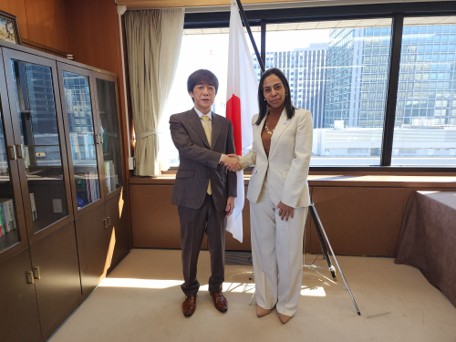
At the Ministry of Foreign Affairs, I paid a courtesy call on His Excellency Mr. Motegi Toshimitsu, Minister for Foreign Affairs of Japan. The Minister welcomed my visit and acknowledged the contributions of the International Seabed Authority since its establishment, including to the management of exploration activities in the Area and the advancement of marine scientific research. He reaffirmed Japan’s strong commitment to the maintenance and development of the maritime order based on the rule of law and expressed his expectation for my continued leadership. He further underscored the importance of the early development of regulations on the exploitation of mineral resources in the Area, taking into account both the conservation of the marine environment and the use of marine resources.
I also held a substantive dialogue with Mr. Kazuhiko Nakamura, Director-General and Legal Adviser at the Ministry of Foreign Affairs. Our discussion focused on consensus-building and the Authority’s role in bridging perspectives across regions. His recognition of ISA’s contribution to facilitating principled dialogue underscored the importance of continued multilateral leadership anchored in UNCLOS.
At the Ministry of Economy, Trade and Industry, my meeting with Vice-Minister Mr. Takehiko Matsuno was forward-looking. He reflected on the growing importance of critical minerals in today’s global context, Japan’s exposure to mineral supply-chain pressures, and the relevance of these dynamics for national energy strategies. The discussion highlighted the importance of advancing work within the International Seabed Authority, and strong support was expressed for the timely development and finalization of the exploitation regulations, taking into account both the conservation of the marine environment and the use of marine resources. He also acknowledged the value of sustained engagement among key governance actors and expressed interest in contributing to ISA capacity-building efforts through training, expertise and the promotion of confidential data sharing.
A particularly substantive exchange followed at the Ocean Mining Industry Promotion Roundtable, bringing together more than 60 public officials, industry representatives and contractors, including Deep Ocean Resources Development Co., Ltd. (DORD), represented by its President, Mr. Hiromasa Ōba, and representatives of the Japan Organization for Metals and Energy Security (JOGMEC). In my intervention, I outlined the Authority’s mandate under UNCLOS and the 1994 Implementing Agreement, its role in regulating activities in the Area, and ongoing efforts to advance a comprehensive, science-based regulatory framework. I emphasized the central role of marine scientific research and environmental protection in informing regulatory development, as well as the importance of capacity development, technology and international cooperation in ensuring responsible and inclusive governance of the Area.
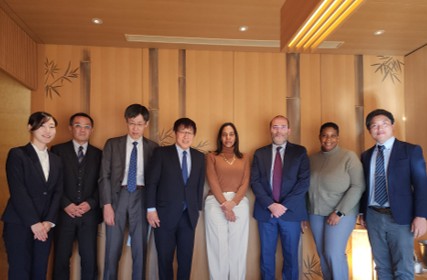
Scientific cooperation emerged as a core theme across the mission. My meeting with Mr. Shuichi Kodaira, Executive Director of the Japan Agency for Marine-Earth Science and Technology (JAMSTEC), underscored the depth of Japan’s research ecosystem, from environmental monitoring to advanced deep-ocean drilling technologies. We explored collaborative pathways ranging from contributions to DeepData to joint training models supporting knowledge transfer and scientific capacity development.
I also met with Mr. Shoichi Ishii, Programme Director in the Cabinet Office responsible for the Strategic Innovation Promotion (SIP) framework. Our exchange highlighted opportunities for cooperation on technological development, monitoring systems and knowledge sharing that can enrich ISA’s decision-making processes and support developing States.
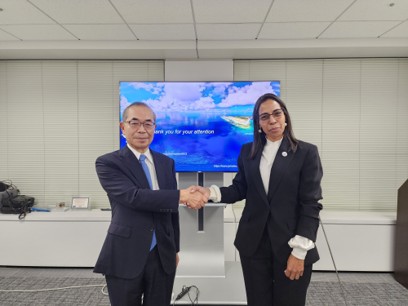
Engagements with non-government partners were equally constructive. At the Nippon Foundation, I met with Mr. Mitsuyuki Unno, Executive Director, for a detailed exchange on shared priorities, including marine scientific research, capacity development and potential alignment with initiatives such as Seabed2030 and Ocean Census. I welcomed their openness to strengthening collaboration and their interest in contributing to ISA’s workstreams and outreach activities.
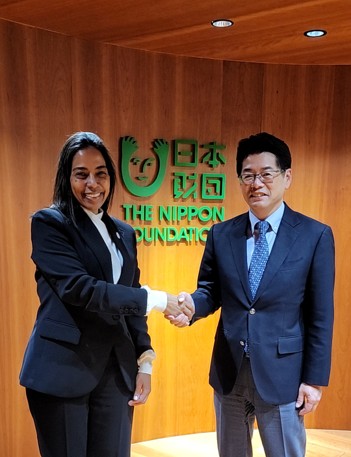
At the Ocean Policy Research Institute (OPRI) of the Sasakawa Peace Foundation, ISA colleagues held productive discussions with Mr. Eiji Sakai, Executive Director. The institution expressed strong interest in partnering with ISA under the Marine Scientific Research Action Plan, including through policy–science dialogue, research cooperation and participation in future ISA activities.
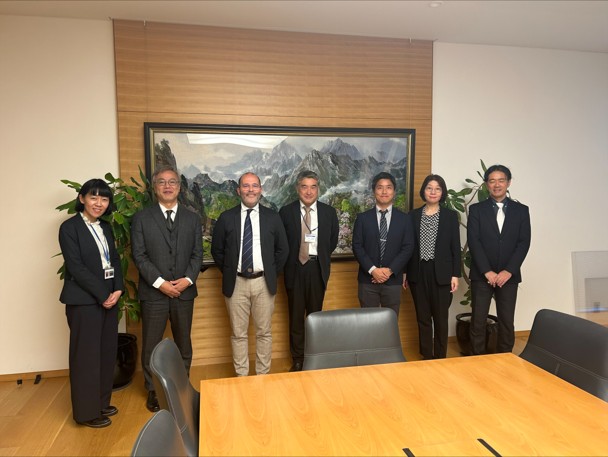
The academic dimension of the mission was equally inspiring. At Kobe University, I was warmly received by President Fujisawa. The University plays a leading role in robotics and ocean science through the Kobe Ocean-Bottom Exploration Center (KOBEC). Our discussion reaffirmed the importance of academic partnerships in shaping future governance frameworks and supporting the implementation of ISA’s Marine Scientific Research Action Plan. I also had the privilege of delivering a guest lecture to students, reflecting on the evolution of ocean governance under UNCLOS, the mandate of the Authority and the opportunities ahead for young scientists. Their engagement underscored the importance of nurturing the next generation of ocean professionals and embedding knowledge exchange into ISA’s cooperation with academic institutions.
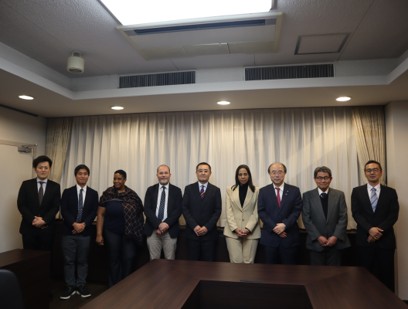
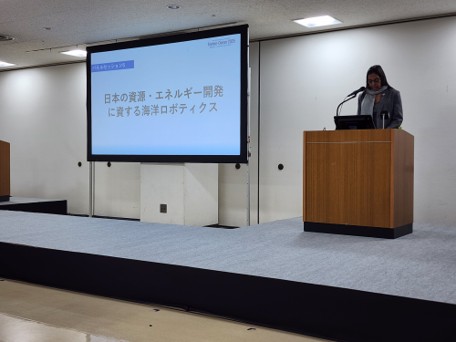
In addition, I participated in a panel discussion entitled “Marine Robotics Contributing to Japan’s Resource and Energy Development”, held in Kobe as part of the Techno-Ocean programme. The exchange showcased Japan’s innovative research ecosystem and highlighted how advances in technology, science and engineering can inform regulatory development at the Authority and support sustainable approaches to deep-sea resource management.
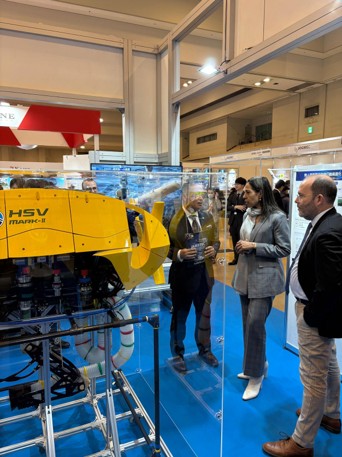
Across all engagements, Japan consistently emphasized that effective governance of the Area must rest on science, predictability and international solidarity. Its significant research investment, alignment with ISA priorities and readiness to deepen cooperation on data, technology and training further position Japan as a key partner in advancing a responsible, inclusive and forward-looking regime for the Area.
I left Japan encouraged by its clarity of purpose, its readiness to collaborate and its unwavering commitment to shared stewardship. As ISA advances its regulatory programme, strengthens scientific cooperation and scales up support for developing States, I look forward to deepening this partnership, with full confidence that Japan will continue to help shape a governance model worthy of the common heritage of humankind and future generations.
Leticia Carvalho
Secretary-General
International Seabed Authority
About ISA
ISA is an autonomous intergovernmental organization mandated by the United Nations Convention on the Law of the Sea to manage the mineral resources of the seabed beyond national jurisdiction for the shared benefit of humankind. ISA is committed to ensuring that all economic activities in the deep seabed, including mining, are regulated and responsibly managed using the best available scientific evidence for the benefit of all humankind.
For media inquiries, please contact:
ISA Communications Unit, news@isa.org.jm
—————
For more information, visit our website, www.isa.org.jm