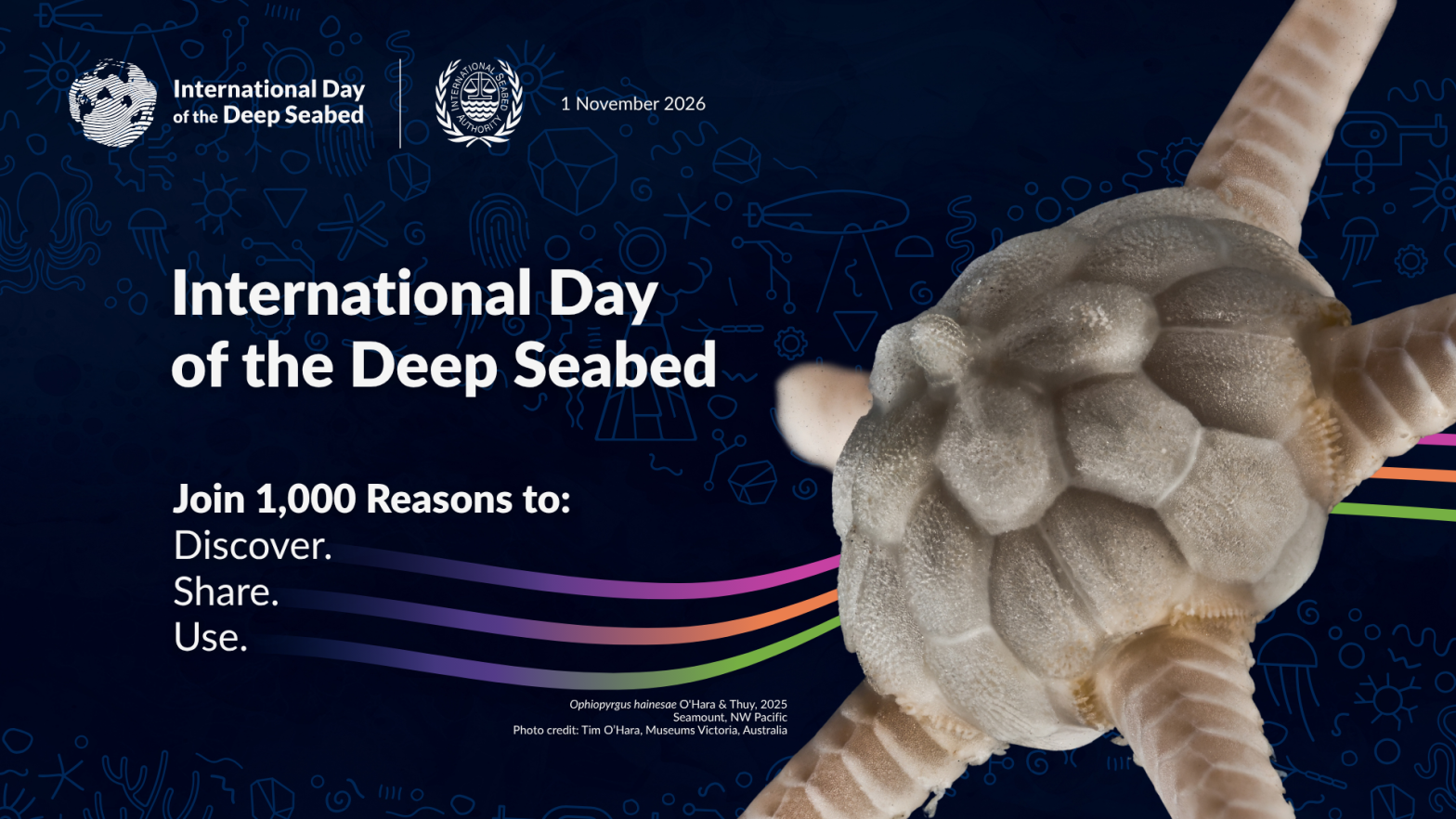
Kingston, Jamaica – 29 May 2026 – This year, the International Day for Biological Diversity calls us to “act locally for global impact,” a principle that resonates deeply with the scientists working to document life in the most remote reaches of our oceans. In the deep seabed, where darkness, cold and crushing pressure define the environment, most species remain unknown to science. Identifying, naming and describing them, the work of taxonomists, is one of the most locally grounded acts in biology research which requires hands-on study of individual specimens from sparse sites. And yet its impact is unmistakably global. Named species can be tracked, protected and incorporated into the international frameworks that govern our shared ocean, including the Kunming-Montreal Global Biodiversity Framework (KMGBF), which sets ambitious targets to halt and reverse biodiversity loss by 2030. The work of the International Seabed Authority (ISA) also depends on this knowledge to fulfill its responsibilities under the United Nations Convention on the Law of the Sea – to regulate and control mineral-related activities in the international seabed Area while protecting the marine environment – and to ensure the sustainable development of deep-sea activities.
News
The ISA-China Joint Training and Research Centre Opens Fourth Workshop on Cumulative Impact Assessment in Sanya, Hainan
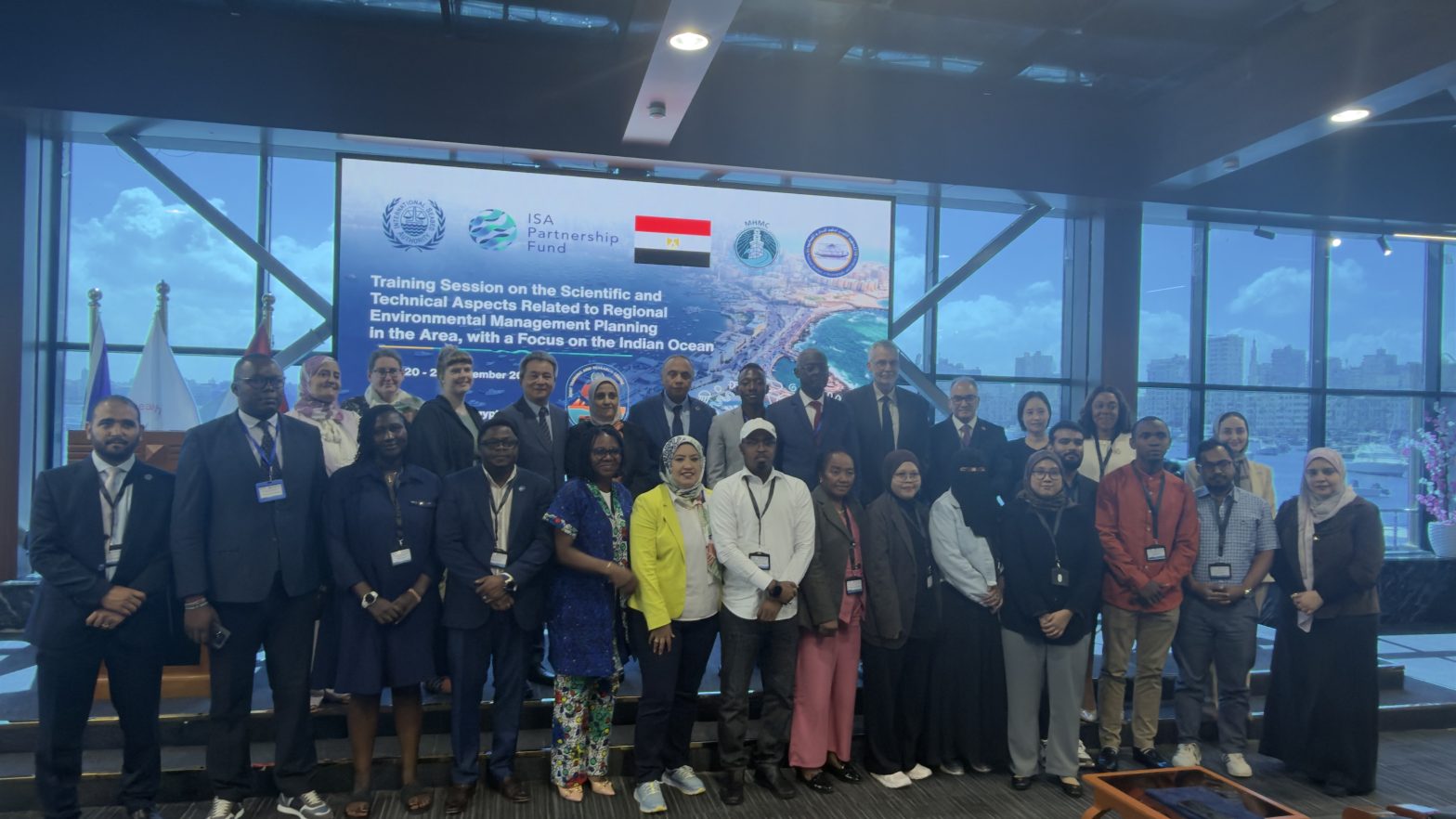
Sanya, Hainan, China – 29 May 2026 – The International Seabed Authority (ISA)-China Joint Training and Research Centre (ISA-China JTRC) officially inaugurated its fourth training workshop today in Sanya, China. The workshop, titled “Cumulative Impact Assessment for Effective Protection of the Marine Environment in the Area: Methods, Case Studies, and Best Practices,” brings together 21 selected participants from developing countries across Africa, Asia-Pacific, Latin America and the Caribbean and members of ISA’s Legal and Technical Commission (LTC), who are serving as lecturers and facilitators throughout the ten-day programme.
Workshop Convened in Busan to Advance Regional Environmental Management Plan for the Northwest Pacific Ocean
Busan, Republic of Korea – 21 May 2026 – A four-day workshop on the development of a Regional Environmental Management Plan (REMP) for the Area of the Northwest Pacific Ocean concluded today in Busan, Republic of Korea. Convened by the International Seabed Authority (ISA) in partnership with the Ministry of Oceans and Fisheries of the Republic of Korea (MOF) and the Korea Institute of Ocean Science and Technology (KIOST), the workshop brought together 30 international participants nominated by ISA members, Contractors, observers, and other stakeholders. Six members of the ISA’s Legal and Technical Commission served as co-chairs and facilitators of the deliberations.
Acting Locally for Global Impact: Why Taxonomy Matters for Governing the Deep Seabed
Kingston, Jamaica – 22 May 2026 – This year, the International Day for Biological Diversity’s call to ‘act locally for global impact’ aligns directly with the International Seabed Authority’s Marine Scientific Research Action Plan, which seeks to advance scientific knowledge of deep-sea ecosystems, its biodiversity and ecological functions, and the potential impacts of exploration and exploitation activities. By studying specific (local) areas of the deep seabed, research findings can be standardized, shared, and applied at a global scale, from refining methodologies for biodiversity assessments, to building the scientific capacity of developing States, to informing the governance decisions that affect the entire international seabed area, which covers nearly 54% of the global ocean, and is called “the Area.”.
Madam Secretary-General, Leticia Carvalho, Welcomed by The Honorable Prime Minister of the Republic of Fiji, Sitiveni Rabuka in a Traditional Ceremony in Suva, Fiji
Suva, Fiji – 18 May 2026 – Madam Secretary-General of the International Seabed Authority (ISA), Ms. Leticia Carvalho, was welcomed by the The Honorable Prime Minister of the Republic of Fiji, Sitiveni Rabuka, in a traditional and official ceremony held in Suva, Fiji, on Monday morning, 18 May 2026.
Ask an Expert: How to Advance Marine Scientific Research in the Deep Sea for Stewardship and Effective Ocean Governance? An interview with José Dallo, Director of the Office of Stewardship, Environment, and Resources, International Seabed Authority
Kingston, Jamaica – 4 May 2026 – The Area, the seabed and ocean floor beyond national jurisdiction, covers as much as 54 per cent of the ocean. The adoption of the UN Convention on the Law of the Sea (UNCLOS) established a comprehensive legal framework governing ocean space, resources, and activities, and created the International Seabed Authority (ISA) to organize and control activities related to mineral resources in the international seabed area for the benefit of humankind. Further, it is uniquely mandated under UNCLOS to encourage the conduct of marine scientific research and disseminate its results.
Small Island Developing States and the Future of Seabed Governance
Kingston, Jamaica – 24 April 2026 – Every year on 25 April, the international community marks the International Day for Small Island Developing States (SIDS). The date commemorates the opening of the 1994 Barbados Global Conference, the first major United Nations conference dedicated to implementing Agenda 21, the sustainable development of SIDS. In the last 30 years, SIDS have moved from the margins to centrality in relation to international ocean governance. As stewards of nearly a third of the world’s ocean, their voice in decisions about how the deep sea is managed and who benefits from its resources must be fully integrated and visible. The Day highlights the unique environmental, social and economic challenges faced by these States while recognizing their leadership in ocean stewardship and climate action.
Discovering Life in the Hadal Depths: How Taxonomy Illuminates the Deep Seabed
Kingston, Jamaica – 26 March 2026 – The deep seabed is teeming with life. From the sediment plains of the abyssal zone to the extreme pressures of hadal trenches, species have evolved over millions of years into forms of extraordinary complexity and resilience. Scientists and governments alike are actively investing in understanding the biodiversity of the deep seabed. That growing body of knowledge equips decision makers to act responsibly and ensure global stewardship of the deep seabed.
The Council of the International Seabed Authority advanced negotiations on the Mining Code
Kingston, Jamaica, 19 March 2026 — The Council of the International Seabed Authority (ISA) has concluded Part I of its 31st Session, held in Kingston, Jamaica, following nine days of intensive negotiations on key elements of the Draft Regulations governing the exploitation of mineral resources in the international seabed Area.